How AI Quiz Generation Speeds Up Course Authoring
By Jevon Davies MBCS RITTech
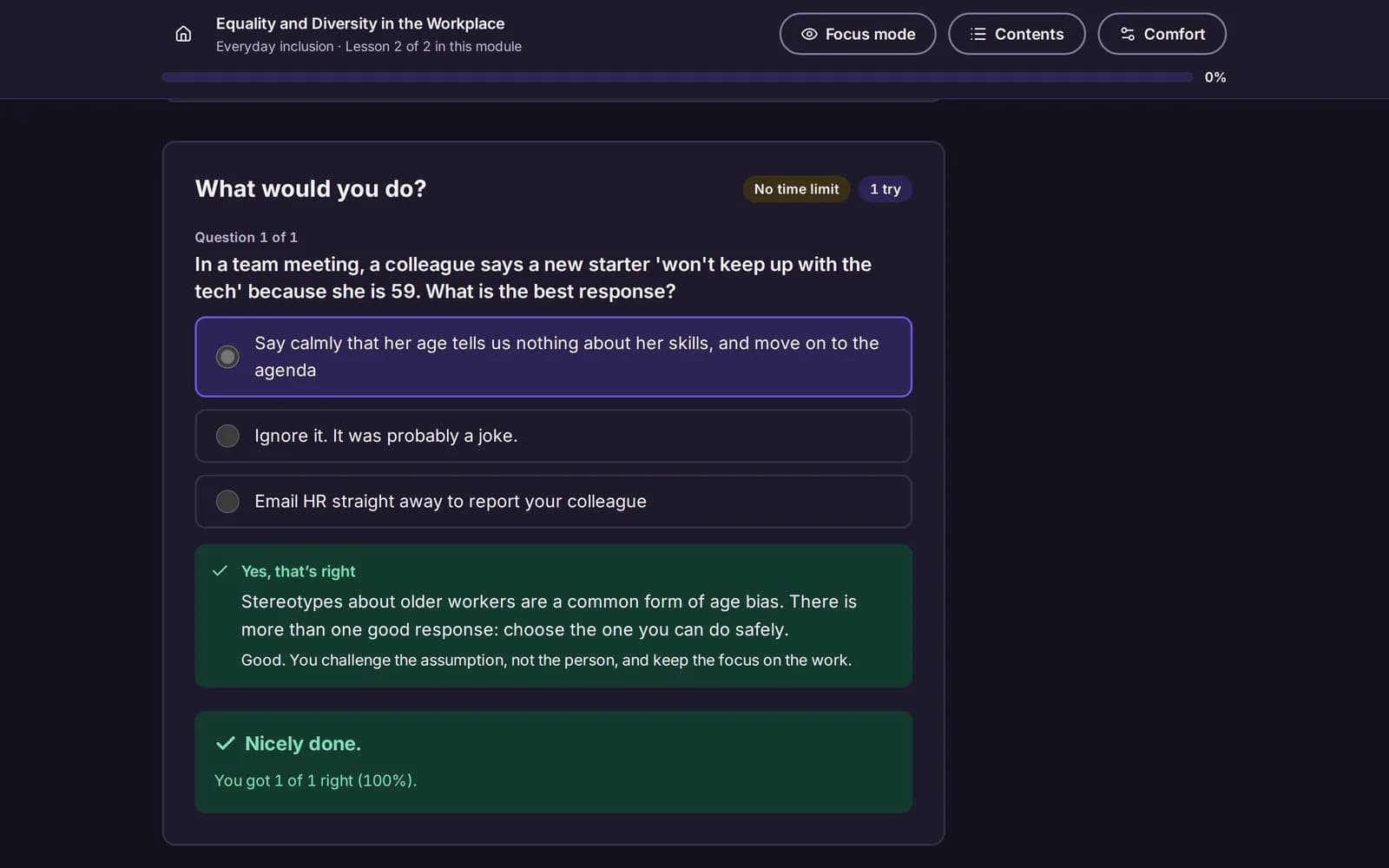
AI quiz generation speeds up course authoring by producing draft questions from lesson content, giving authors a starting point they can review and edit instead of writing every item from scratch. It works best as a productivity layer: the author checks the questions, answers and feedback before anything reaches learners.
For independent training providers (ITPs), this can reduce repetitive work across apprenticeships, T Levels, higher technical qualifications (HTQs), continuing professional development (CPD) and employer training. The subject expert remains responsible for assessment quality. AI helps prepare a draft; it does not replace professional judgement.
How does AI quiz generation speed up course authoring?
Writing questions takes time, particularly when a programme contains many lessons or needs adapting for different learner groups. An AI-powered quiz tool can use lesson content to generate draft questions, which authors can then refine to match the intended outcomes and level of challenge.
That changes the starting point. Rather than opening a blank assessment, an author can review suggested questions and focus effort on accuracy, clarity and relevance.
A practical workflow is:
- Build or update the lesson content.
- Generate draft quiz questions from that content.
- Review each question, answer and feedback statement.
- Edit or remove items that do not meet the course requirements.
- Approve the finished content through your organisation’s normal process.
The time saved depends on the material and how much revision is needed. AI can accelerate drafting, but subject expertise still determines whether a question is suitable.
What should authors check before publishing AI-generated questions?
Generated questions can contain errors, unclear wording or distractors that do not test the intended knowledge. Review each item against the learning outcome, source lesson and assessment purpose.
A useful quality check covers:
- Accuracy: Does the question and its answer reflect the lesson and current practice?
- Alignment: Does it test the knowledge or skill the lesson is meant to develop?
- Clarity: Can learners understand what is being asked without guessing at the wording?
- Answer quality: Is the correct response defensible, and are other options clearly incorrect?
- Feedback: Does the explanation help learners understand the answer?
- Accessibility: Is the language direct, and does the question work with the course’s wider accessibility requirements?
The Department for Education’s Generative artificial intelligence in education guidance, published in 2025, says AI-produced content needs critical judgement for accuracy and appropriateness. It also makes clear that the professional and organisation remain responsible for the final material. That is a sound principle for course authors: treat every generated item as a draft, not an approved assessment.
How can providers keep authors in control?
The best workflow makes AI suggestions easy to inspect and change. Authors need to be able to compare generated content with the original lesson, adjust wording, correct answers and decide whether each question belongs in the course.
In ExyonLearn, AI-generated quiz questions appear as suggestions alongside the original content. Nothing changes or reaches learners until the author accepts it. Authors can set their own AI defaults or switch AI off. AI features use UK-region models only through Exyon’s own gateway.
This keeps the tool in an assistant role. The author decides what to keep, what to change and what to reject. Where a provider has a review process, approval can add a further check before content is published.
What makes a useful prompt and review process?
The question generation step is only part of the work. Authors get more useful drafts when they have a clear lesson, audience and assessment purpose in mind. Before generating questions, identify:
- The lesson topic and relevant source material.
- The learner group and expected level.
- The learning outcome the questions should check.
- The type of questions suited to that outcome.
- Any course-specific terminology or standards that must be used.
Then review the draft against those requirements. For example, a question designed to check recall may not be suitable for assessing whether a learner can apply a procedure in context. A polished question can still test the wrong thing.
Consider the consequences of the result, too. A formative quiz used to reinforce learning is different from a decision that affects progression or a formal qualification. Ofqual’s blog on AI in marking, published on 14 January 2026, says AI is not currently suitable as the sole mechanism for high-stakes marking under its regulatory requirements. That is about marking, not drafting quiz questions, but it underlines why assessment decisions need appropriate human oversight.
How does ExyonLearn support quiz authoring?
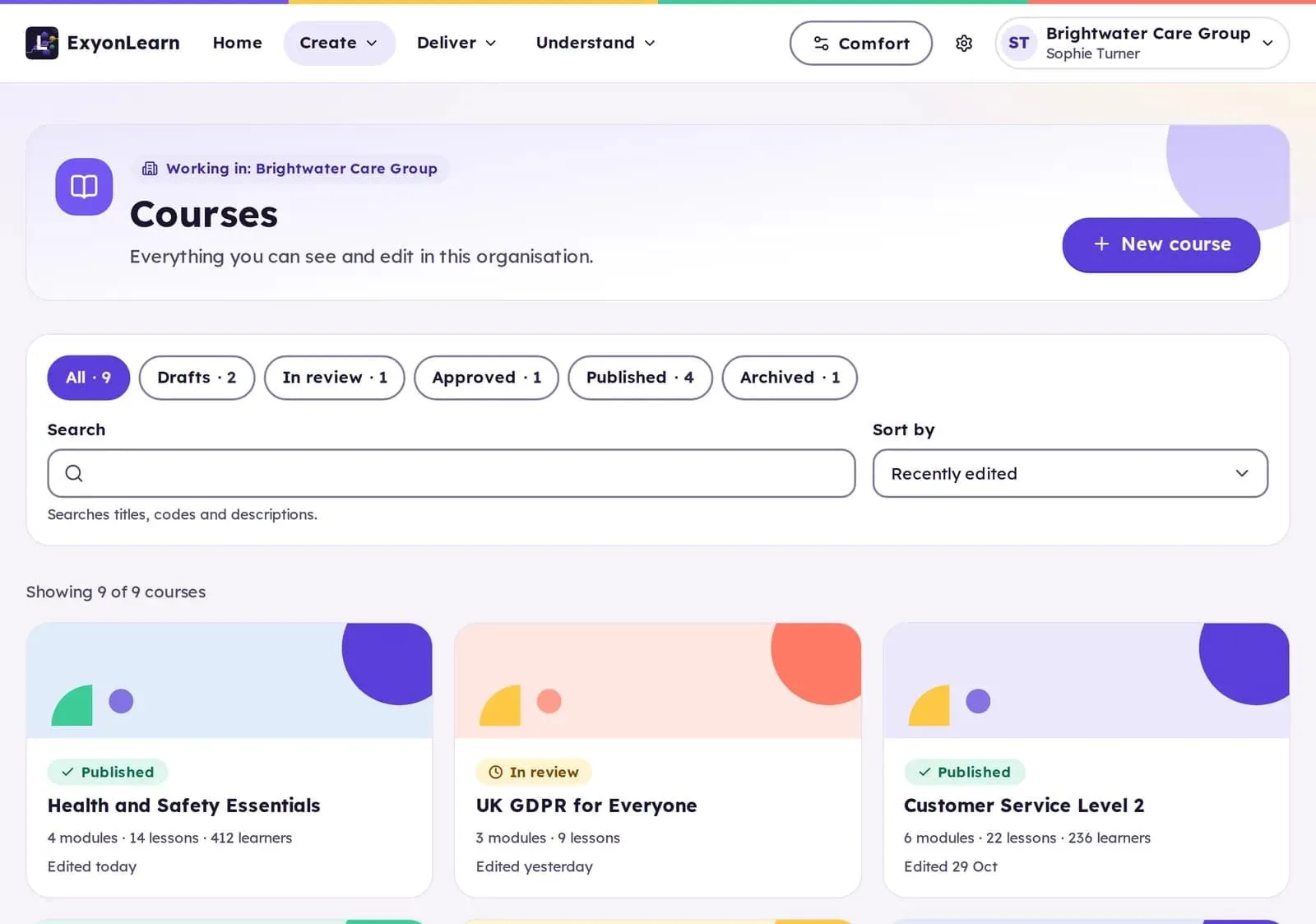
ExyonLearn is course authoring software for building and delivering learning content. It is an authoring platform with learner management tools built in, rather than a full learning management system (LMS). Providers can create content and manage learners in the platform, or export courses to the LMS they already use.
Its AI quiz generation sits within a broader authoring workflow:
- Block-based editing: Build lessons with more than 25 content block types and interactive components.
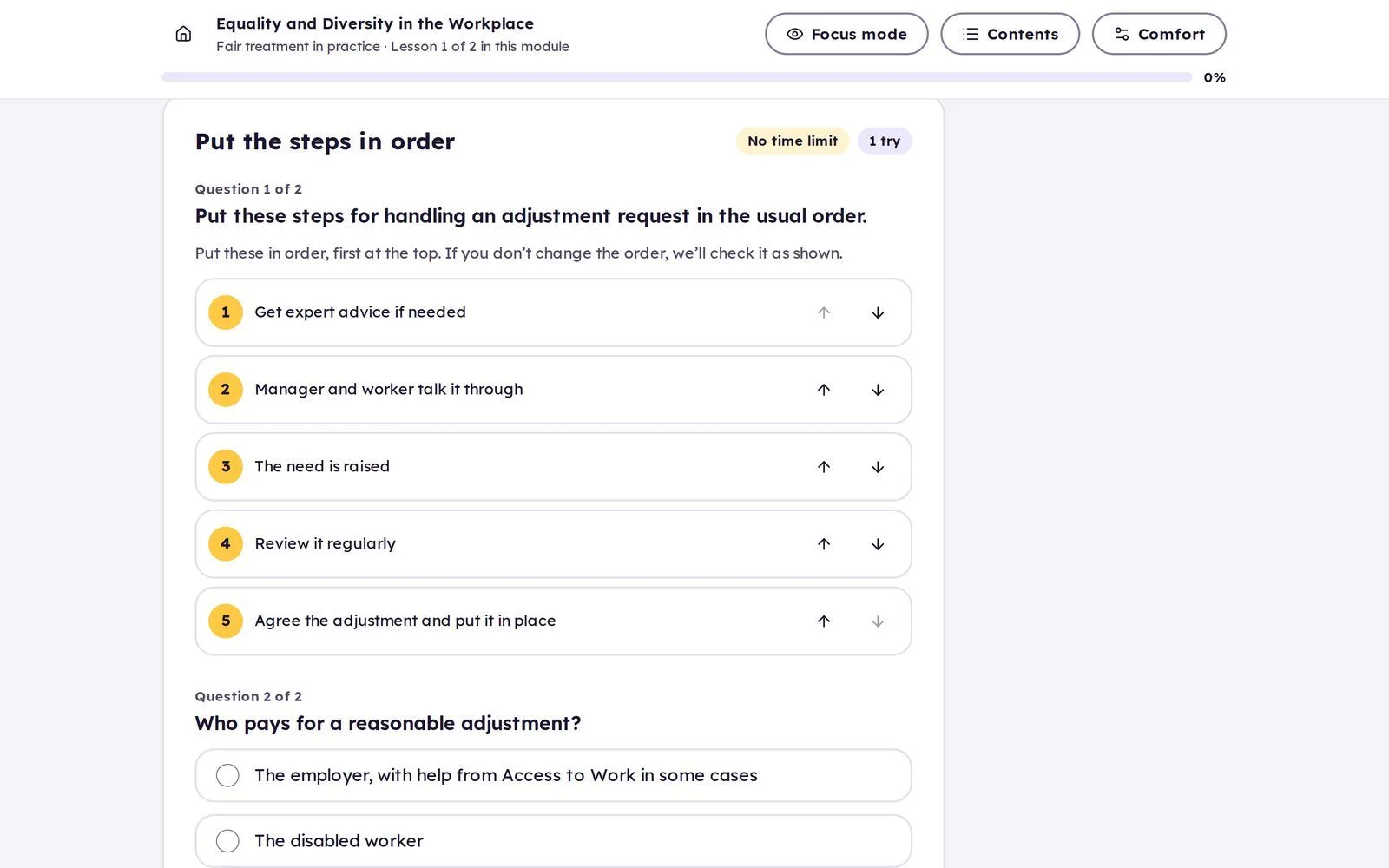
- Assessment tools: Create questions using eight types, including multiple choice, multiple select, true or false, fill in the blank, matching, ordering, short answer and essay.
- AI quiz generation: Generate questions from lesson content, then review and edit suggestions before they reach learners.
- Course export: Publish content for another system as SCORM 1.2, SCORM 2004, xAPI or HTML.
- Learner support: Generate British voice narration from lesson text, issue certificates automatically and use course checks designed to WCAG 2.2 AA.
These capabilities support a complete authoring process, from lesson structure to assessment and export. To see the platform’s scope, explore ExyonLearn’s course authoring and delivery features.
Can one authoring tool support different programmes?
A provider may create content for apprenticeships, T Levels, HTQs, CPD and employer training. The core authoring process remains similar: organise subject matter into lessons, check learning, review content and publish it in the required format.
ExyonLearn is programme agnostic. Authors can build interactive e-learning content for different training contexts, then use learner management tools in the platform or export courses to a SCORM or xAPI LMS. This gives providers control over how they create and distribute learning without limiting content to one programme type.
For more on how course authoring fits an ITP’s work, see Exyon’s information for training providers.
How should teams measure the benefit?
Measure productivity without treating speed as the only outcome. Compare the time spent drafting and reviewing assessments, but also check whether questions meet your quality requirements and remain aligned with course content.
Teams can look at:
- Time from lesson completion to approved quiz.
- The number of generated questions retained, edited or rejected.
- Common review issues, such as ambiguous wording or incorrect answers.
- Learner performance and feedback on quiz clarity.
- Whether assessment coverage reflects the intended learning outcomes.
These measures help teams improve prompts, review guidance and authoring practice over time. They also keep the focus on useful assessments, not simply producing more questions.
How can you get started with AI-assisted quiz authoring?
Start with a course where the learning outcomes and source material are clear. Generate a small set of draft questions, review each one with a subject expert and refine the team’s checking process before applying it more widely.
AI quiz generation can reduce the effort involved in creating a first draft. The value comes from combining that assistance with author control, reliable review and a flexible way to publish courses.
Book a demo of ExyonLearn to see how AI-assisted quiz generation fits into a course authoring workflow.
Related articles
- Accessibility Checks That Change How You Publish Courses
6 November 2026
Accessibility checks change course publishing by helping teams identify barriers while content is being authored, before it reaches learners. An authoring…
- Looking for Course Authoring Software? 10 Things to Know
2 November 2026
Ten things to check when choosing course authoring software, so your team can create, review and improve learning while tutors keep a clear view of progress.
- WCAG 2.2 for Online Courses: A Course Author's Guide
28 October 2026
Accessibility is now a core requirement for online learning. Course teams need to review not only their learning management system (LMS), but also course…
See it with your own programmes
Book a personalised walkthrough built around how your organisation funds, delivers and evidences training. No obligation.