Milburn Report: Five Steps for Training Providers
By Jevon Davies MBCS RITTech
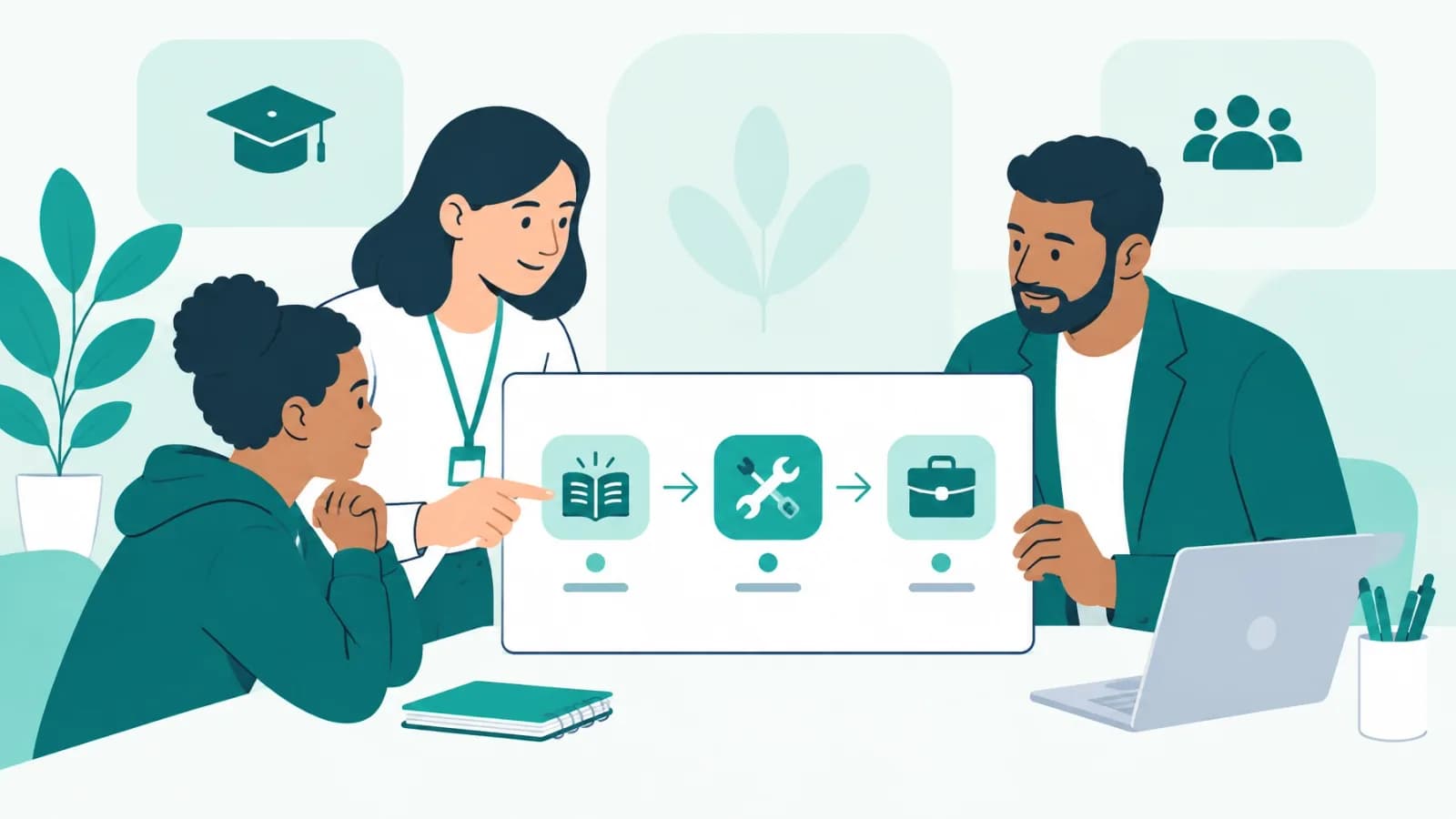
Training providers can prepare now by checking programme capacity, building reusable learning content, reviewing accessibility, strengthening employer relationships and organising learner data. The Milburn review’s final report, From a Welfare State to a Working State, was published on 17 November 2026, and the government has said it agrees with its core principles while it works up a full response.
When was the Milburn final report published?
The final report, From a Welfare State to a Working State: a new settlement for the next generation, was published on GOV.UK on 17 November 2026. It follows the interim report, Young people and work: interim report, published on 28 May 2026.
Publication is not the same as settled policy. On the same day, the Department for Work and Pensions published its response, saying the government agrees with the report's core principles and setting out immediate steps, with a White Paper to follow next year and legislation after that.
For providers, this is still a period for practical preparation rather than policy assumptions. Review what your organisation can adapt without committing to a particular programme design, funding model or delivery timetable.
What does the final report recommend?
The report sets out a 10 year programme towards a NEET rate of around 5% by 2036, which it calls NEET Zero, with a first milestone that no 16 or 17 year old is not in education, employment or training (NEET). Its main proposals are:
- Statutory guarantees. An Opportunity Guarantee and a Support Guarantee for 18 to 24 year olds who are NEET, delivered through a locally led Youth Opportunity Service, with a named adviser within 14 days and a co-signed Participation Plan within 4 weeks.
- Apprenticeships as the largest education and skills priority. Under 25 starts rising from around 172,000 in 2024/25 to around 270,000 by 2036/37, the achievement rate moving from around 65% to 80%, removal of the HM Treasury topslice, 100% funding for under 25s from Levy proceeds, funding for over 25s cut by a quarter, and a new £2,000 incentive paid to providers alongside a hiring payment raised to £2,500.
- A pre-apprenticeship route at scale. An initial 25,000 places, built on level 1 provision and the new level 2 Occupational Certificates, with colleges as the principal providers for 16 to 18 year olds.
- Further education expansion. Around 150,000 more 18 to 24 year olds participating each year, plus a participation and work-readiness premium for colleges aimed initially at 16 and 17 year olds who are NEET or at serious risk.
- Employer incentives of around £1.1 billion a year once scaled up: £3,000 for hiring a young person who has been NEET for six months, an extra £2,000 where someone faces greater barriers, a further £2,000 for employers with fewer than 50 staff, and a five year glide path to lower employer National Insurance for 21 to 24 year olds in retail and hospitality.
- A Care Leaver Transition Allowance of £50 a week for 6 months for care leavers who are NEET or at serious risk.
None of it is settled policy. The government response published the same day endorses the core principles and commits to locally led youth services, an Opportunity and Support Guarantee and a Youth Opportunities Unit. It also brings the Jobs Guarantee forward from 18 months to 12 from April. A White Paper follows next year, with legislation after that.
The interim report, published on GOV.UK on 28 May 2026, still holds the firmest evidence on scale. It says nearly one million 16 to 24 year olds in the UK are not in education, employment or training, around one in eight, and it describes a weakened education “shock absorber”: fewer 18-year-olds were in further education or apprenticeships in 2024 than a decade earlier.
Employers also reported that the Growth and Skills Levy was too inflexible. They said they would value being able to use funds for shorter courses, pastoral support, pre-apprenticeship activity or backfilling costs. On average, employers reported spending around 42% of their levy funds.
Some government commitments are already confirmed. The DfE and DWP announced a new deal for young people on 22 June 2026, including the Youth Guarantee, incentives for businesses to hire young people who have been out of work, guaranteed subsidised jobs and reform of the Growth and Skills Levy. The government said these measures would help deliver up to 500,000 opportunities.
Separately, a GOV.UK announcement on 5 November 2026 confirmed plans for a “say what you pay” law requiring employers to publish salaries in job adverts. This is a confirmed government commitment, distinct from proposals expected in the Milburn final report.
What can providers do now?
Treat the report as a planning signal rather than a funding announcement. These steps hold whether or not the recommendations are adopted.
1. Check which programmes could serve younger learners
Map programmes that could potentially be adapted for a 16 to 18 year old pre-apprenticeship cohort. Consider entry requirements, teaching capacity, delivery patterns, technical content and the support learners may need to participate.
Assess English and maths capacity in particular. If a programme would need to combine core skills with technical learning, identify what staff, learning materials and timetable changes that would require. Record gaps and possible solutions, without assuming a start date or funding model.
2. Prepare reusable foundation content
Build or organise short learning units that can support different cohorts and programmes. Employability, digital skills, sector tasters and study skills can provide a common foundation for pre-apprenticeship provision, apprenticeships and T Level intakes.
Keep content modular. A short unit can be adapted to a sector, tutor group or learner starting point without rebuilding a whole course. Review what already exists, identify material that needs updating and agree who will maintain it.
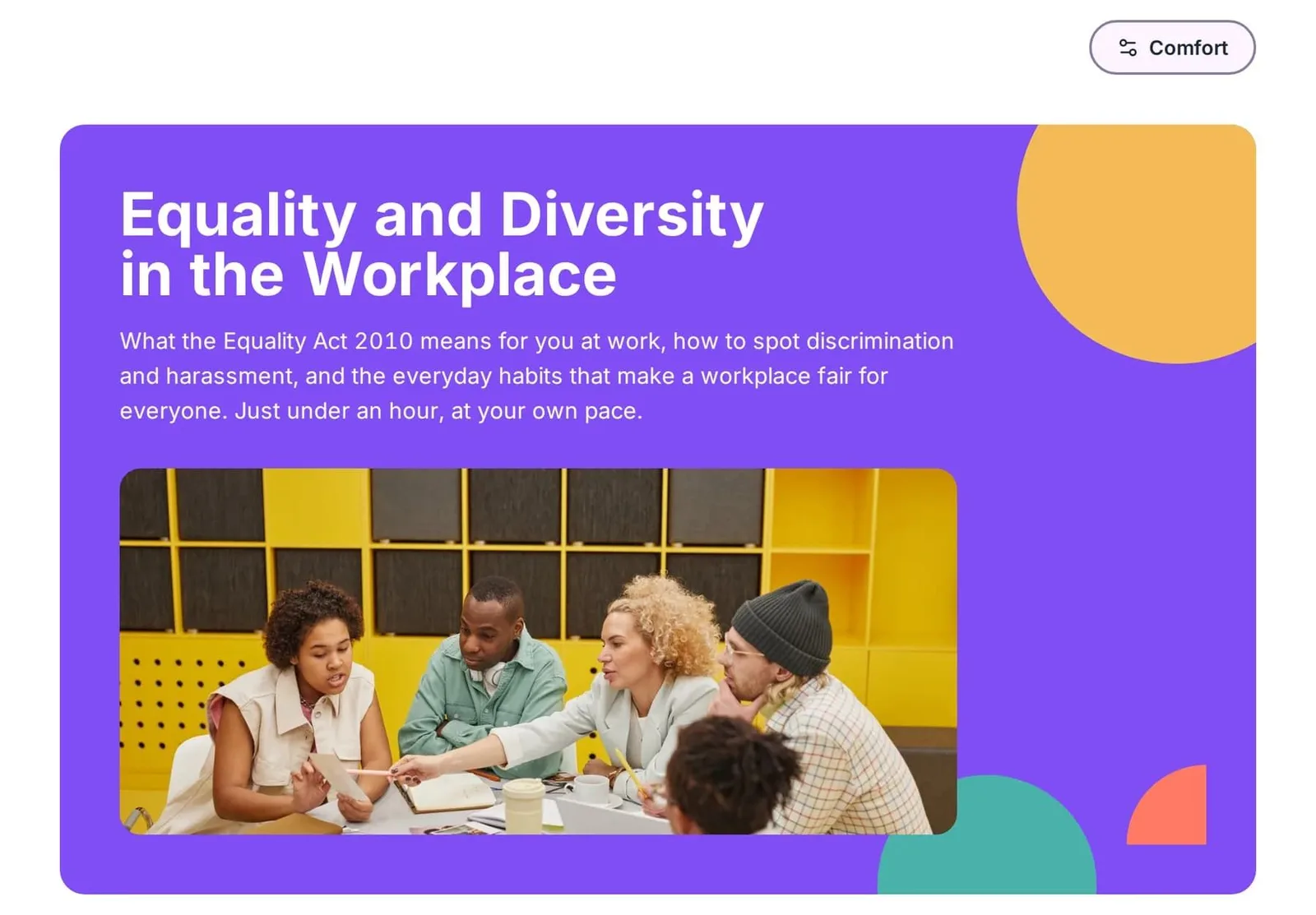
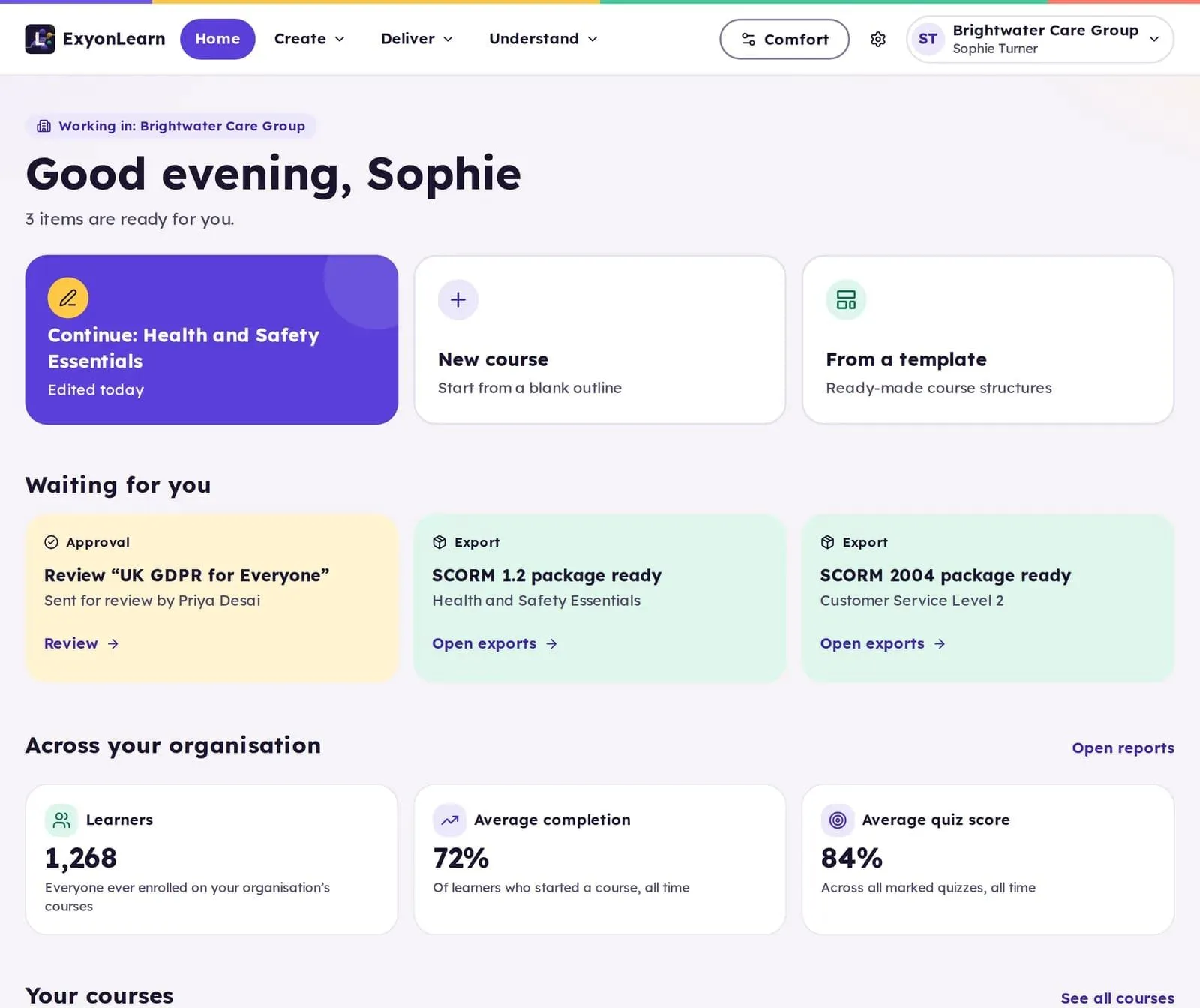
ExyonLearn supports this approach with a block-based editor, more than 25 content block types and interactive components. Authors can save courses as reusable templates, use one of eight accessible built-in themes or create their own, and export courses to SCORM 1.2, SCORM 2004, xAPI or HTML for use in a compatible learning management system.
3. Build accessibility into content from the start
The interim report highlights the growing role of disability and health needs among young people who are NEET. It reports that learning difficulties and autism are increasing faster than mental health conditions as primary health conditions in this group. It also notes that almost a quarter of children aged 11 to 16 had a probable mental health disorder in 2023.
For providers, the practical response is to review learning access before a new cohort arrives. Check whether content is clear, navigable and usable in different ways. Consider how learners can adjust text and presentation, and how tutors can offer support where an individual needs it.
In ExyonLearn, learner themes include OpenDyslexic, Lexend and Atkinson fonts. The platform is designed to WCAG 2.2 AA and fully conforms to WCAG 2.2 AA. Pre-publication accessibility checks flag issues, and must-fix problems block publishing.
4. Review employer relationships
Talk with employer partners about what would make it easier to support young people into training and work. Ask about local skills needs, suitable tasters, workplace experience, induction support and barriers to offering entry-level opportunities.
The interim report records employer concerns about levy flexibility and the costs of supporting new starters. These conversations can help providers shape relevant content and identify practical forms of collaboration, regardless of whether the final report recommends a pre-apprenticeship route.
Employers can also review recruitment information and entry routes. The government’s announced “say what you pay” law is a reminder that clear job information is part of making opportunities easier to assess and apply for.
5. Organise learner and programme data
Make sure your existing systems can give a clear view of participation and progress from the beginning of a programme. Review how your organisation records enrolment, attendance, learning activity, support needs, reviews and progression, and how staff access the information they need.
Good data organisation is useful even if no new monitoring requirement follows. Agree consistent definitions, check that teams can produce reports and identify where information is missing or difficult to reconcile. This gives managers and quality leads a stronger starting point if future local partnership or reporting arrangements emerge.
How can providers prepare content for younger cohorts?
Create a small, reusable content library rather than a separate course for every possible policy scenario. Start with core units that can be personalised for different sectors, delivery settings and learner needs. Then define a simple review process so tutors and quality staff can check material before it reaches learners.
With ExyonLearn, teams can use templates, manage learners and groups, assign tutors, upload learners in bulk and export reports to CSV or Excel. Review and approval tools can require a second person to sign off content before publishing, with authors unable to approve their own edits.
These controls support consistent delivery across programmes while leaving subject specialists in charge of the learning content and its release.
What could new cohorts mean for provider systems?
If local delivery, closer tracking or new pre-apprenticeship programmes emerge, providers may need to coordinate recruitment, delivery, support and reporting across more types of learners. The specific requirements are not yet known.
Pulse by Exyon Software is being built to support provider operations across recruitment and customer relationship management, delivery, off-the-job (OTJ) hours, reviews, safeguarding, additional learning support (ALS) and special educational needs and disabilities (SEND), end-point assessment (EPA), funding and the individualised learner record (ILR). In development, not yet generally available; early access partners welcome.
When Pulse launches, learners will launch from Pulse straight into their course, signed in securely, and their progress will flow back automatically. This is a future capability, not a service currently available to providers.
Is any of this preparation wasted?
No. Programme audits, reusable learning content, accessible delivery, employer conversations and well-organised records are useful across apprenticeship, technical and vocational provision. None depends on a particular recommendation being adopted.
The report has now set out where government ambition is heading, but funding and timetabling remain to be confirmed. That makes practical improvements worth doing now, while plans stay flexible. For support designed around independent training providers, visit our page for training providers, explore ExyonLearn, or book a demo.
Related articles
- Integrating Pre-Apprenticeship Content Into Programmes
18 November 2026
Independent training providers can prepare for pre-apprenticeship activity by building reusable foundation content that connects with existing vocational…
- Accessibility Checks That Change How You Publish Courses
6 November 2026
Accessibility checks change course publishing by helping teams identify barriers while content is being authored, before it reaches learners. An authoring…
- WCAG 2.2 for Online Courses: A Course Author's Guide
28 October 2026
Accessibility is now a core requirement for online learning. Course teams need to review not only their learning management system (LMS), but also course…
See it with your own programmes
Book a personalised walkthrough built around how your organisation funds, delivers and evidences training. No obligation.